🔗See who the man inside the clock actually is and how much he got paid for it:
The Mystery Solved: Who is the Man Inside the Schiphol Clock and How Much Did He Get Paid?
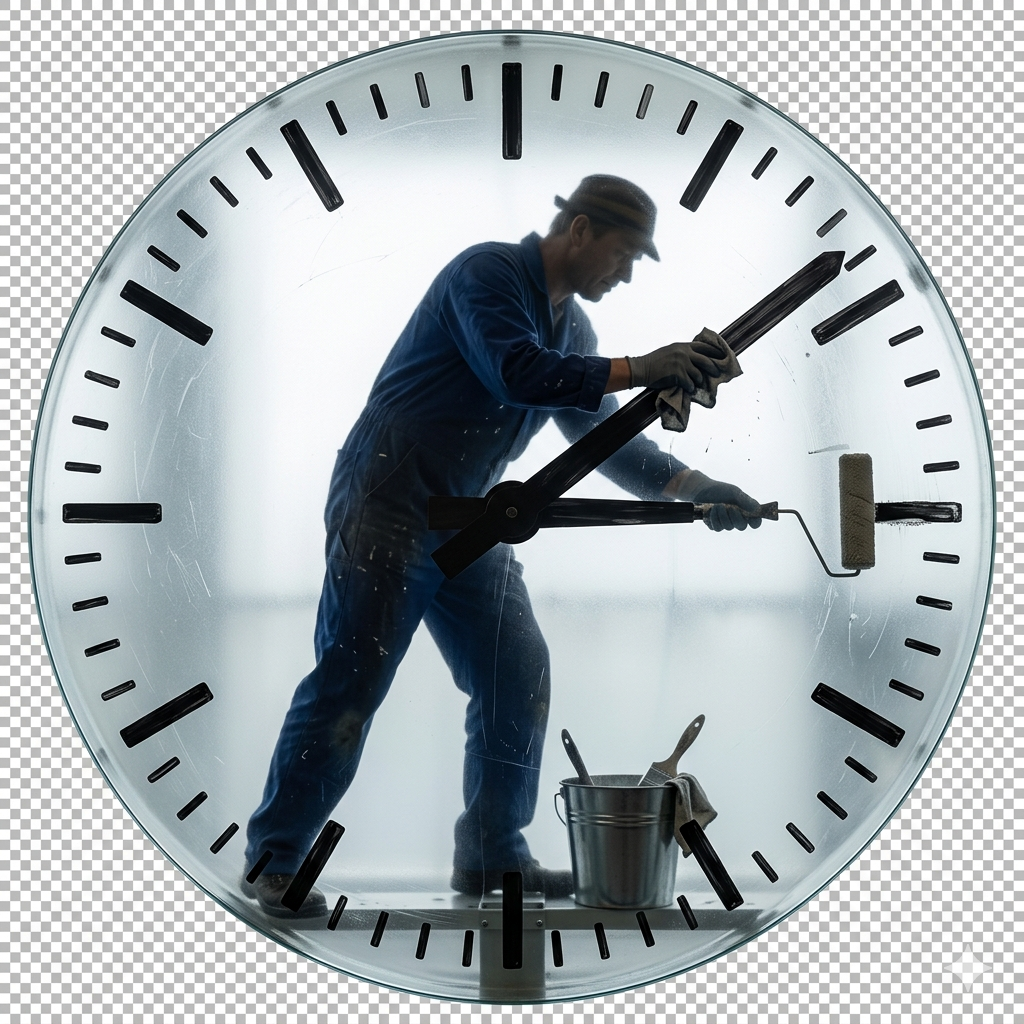
f you’ve ever walked through Lounge 2 at Amsterdam’s Schiphol Airport, you’ve probably stopped and stared at the giant, translucent clock. Inside, a man in a blue jumpsuit appears to be hand-painting the clock hands minute by minute, only to wipe them away and start over.
It looks like the most exhausting, tedious 24-hour job in the world. But what is the real story behind it?
Who is the man inside the clock?
First, let’s clear up the biggest rumor: No, there isn’t a real person trapped inside that clock.
What you are looking at is a highly realistic, 12-hour-long video recording projected onto a massive screen. The “man” inside is actually an actor, and the mastermind behind this entire project is the world-renowned Dutch designer Maarten Baas.
To create this masterpiece (titled Schiphol Clock, part of his Real Time series), Baas literally rented a studio, built a mock-up of the clock, and hired an actor to perform the exact movements for 12 hours straight, without breaking character. Every single minute was recorded in real-time. There are no loops or CGI tricks—just 12 hours of continuous human labor.
How much did he get paid for it?
This is the question everyone asks. While the exact, dollar-for-dollar paycheck of the specific actor remains a closely guarded corporate secret by Maarten Baas’s studio, we can look at the massive value of the project to understand the scale:
- The Artwork Value: Maarten Baas’s Real Time clocks are luxury art pieces. Similar physical clocks from this series sell to private collectors and museums for anywhere between $150,000 to over $300,000 USD.
- The Airport Contract: Schiphol Airport commissioned this as a major landmark piece. Projects of this scale involve budgets well into the tens of thousands of dollars just for the production, meaning the actor was compensated highly for his grueling 12-hour physical performance.
- The Work Conditions: Performing heavy physical labor (painting, wiping, standing) for 12 hours straight under studio lights requires specialized stunt/performance pay, making it one of the highest-paying 12-hour shifts an actor could get.
Why does this clock exist?
Maarten Baas created it as a tribute to the invisible workers of the airport—the cleaners, the baggage handlers, and the maintenance staff who work around the clock to keep our travels smooth. The blue overalls and the yellow cleaning rag the actor uses are a direct nod to the uniform colors of the Dutch railway and airport staff.
So, next time you fly through Amsterdam, you can tell your fellow travelers the ultimate secret: it’s not a real prison sentence, it’s just one of the greatest illusions in modern art.